Inside John Holland — May 2024
May 2024
Welcome to Inside John Holland
I’m pleased to share the latest edition of Inside John Holland. In this edition, you’ll read about how we’re:
- working to increase the number of women in trade and non-traditional construction roles through our industry-leading pre-employment program on Sydney’s M7-M12 Integration Project
- maintaining and upgrading water and wastewater assets around the country
- delivering Stage 2A of the Canberra Light Rail
- transforming manufacturing in Queensland.
While that’s a small insight into what’s happening across John Holland today, our legacy is 75 years young. Since 1949, we’ve applied ourselves to literally thousands of projects across Australia and New Zealand, transforming lives for the communities where we’ve worked.
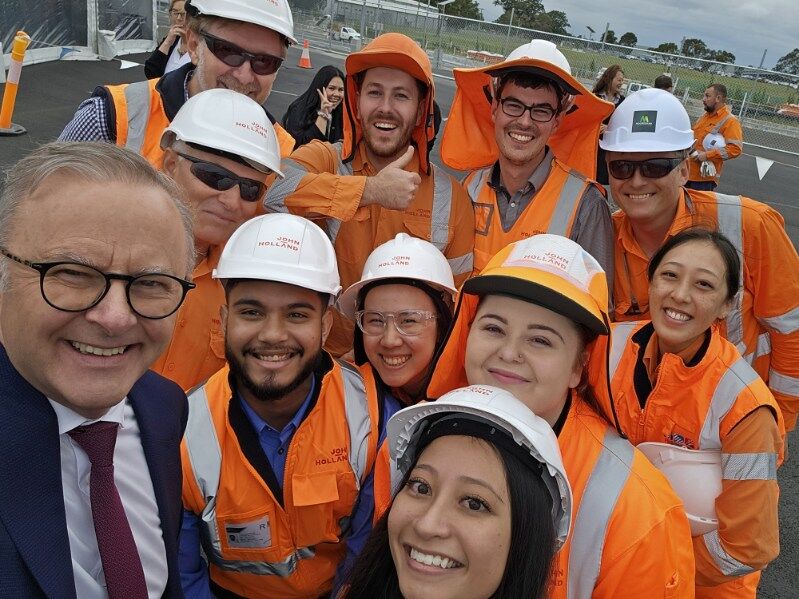
It was great to see Prime Minister Anthony Albanese welcoming the first interstate freight train at Australia’s largest intermodal precinct at Moorebank, Western Sydney last month - a facility we're proud of delivering for Qube and the National Intermodal Corporation.
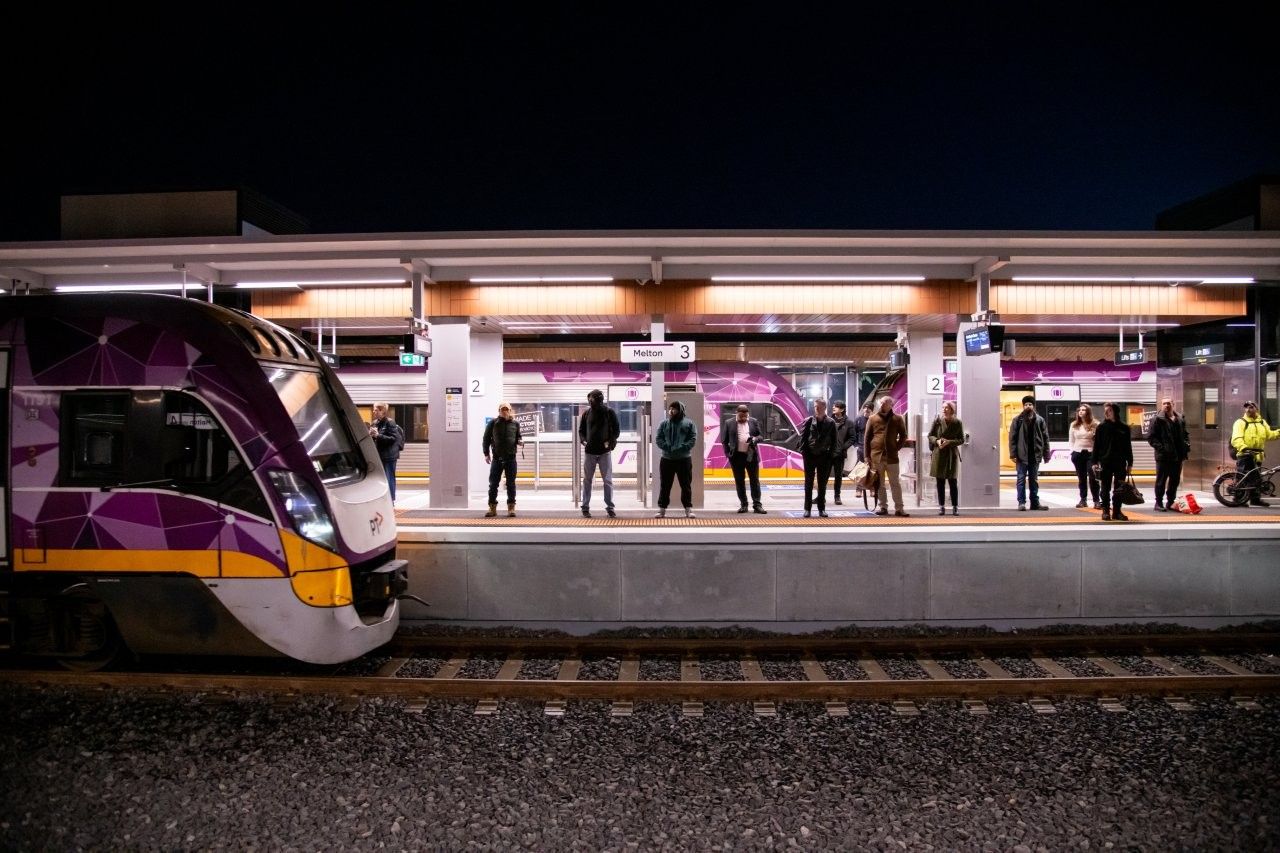
I’m also excited that turn-up-and-go testing has started in the Metro Tunnel in Melbourne with crews successfully running 12 trains back and forth from West Footscray to Hawksburn over a 3-hour period. That’s 18 trains each hour - 54 journeys in total - with trains running as frequently as 2 minutes apart.
At John Holland we are focused on what we can do to improve the culture of our industry and I’m optimistic about the contribution we are making regarding flexibility and diversity.
More and more of our projects are adopting a five-day working week with interim findings of the CICT's Culture Standard Trials, including ours at Sydney Children's Hospital, indicating an average 50-hour week over five days has strong support and does not appear to adversely affect site productivity.
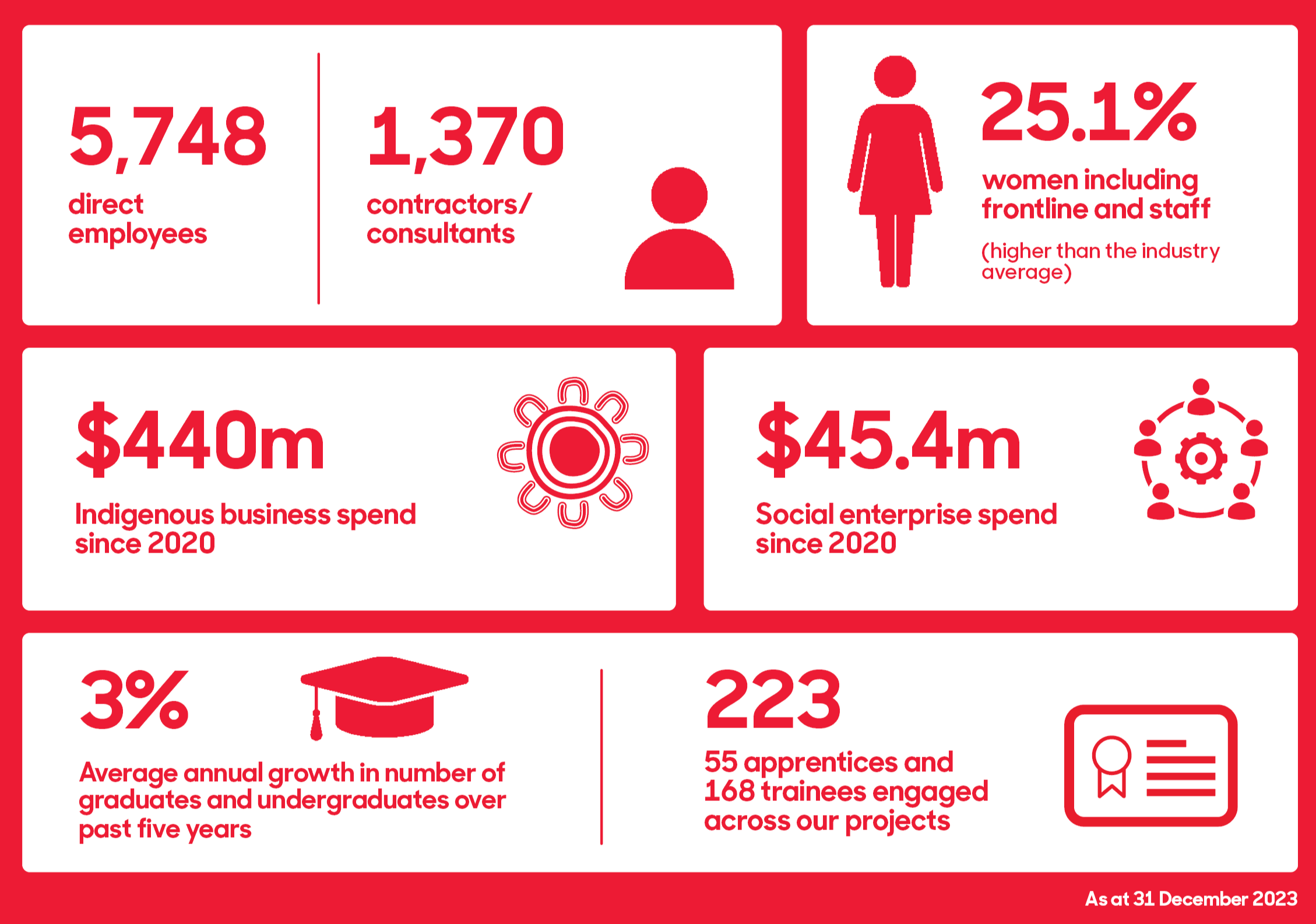
Taking the learnings from the Sydney Children's Hospital project and others, we’re working to embed greater flexibility and diversity across our portfolio of projects. Our female workforce – onsite and in the office - currently represents almost a quarter of our 5,700-strong business, we need to do better but I know we’re gaining momentum.
We’re also investing in the next generation, and I’m proud to share that John Holland was recently named the top Graduate Employer for Construction and Property Services in Australia by graduate careers platform, Prosple.
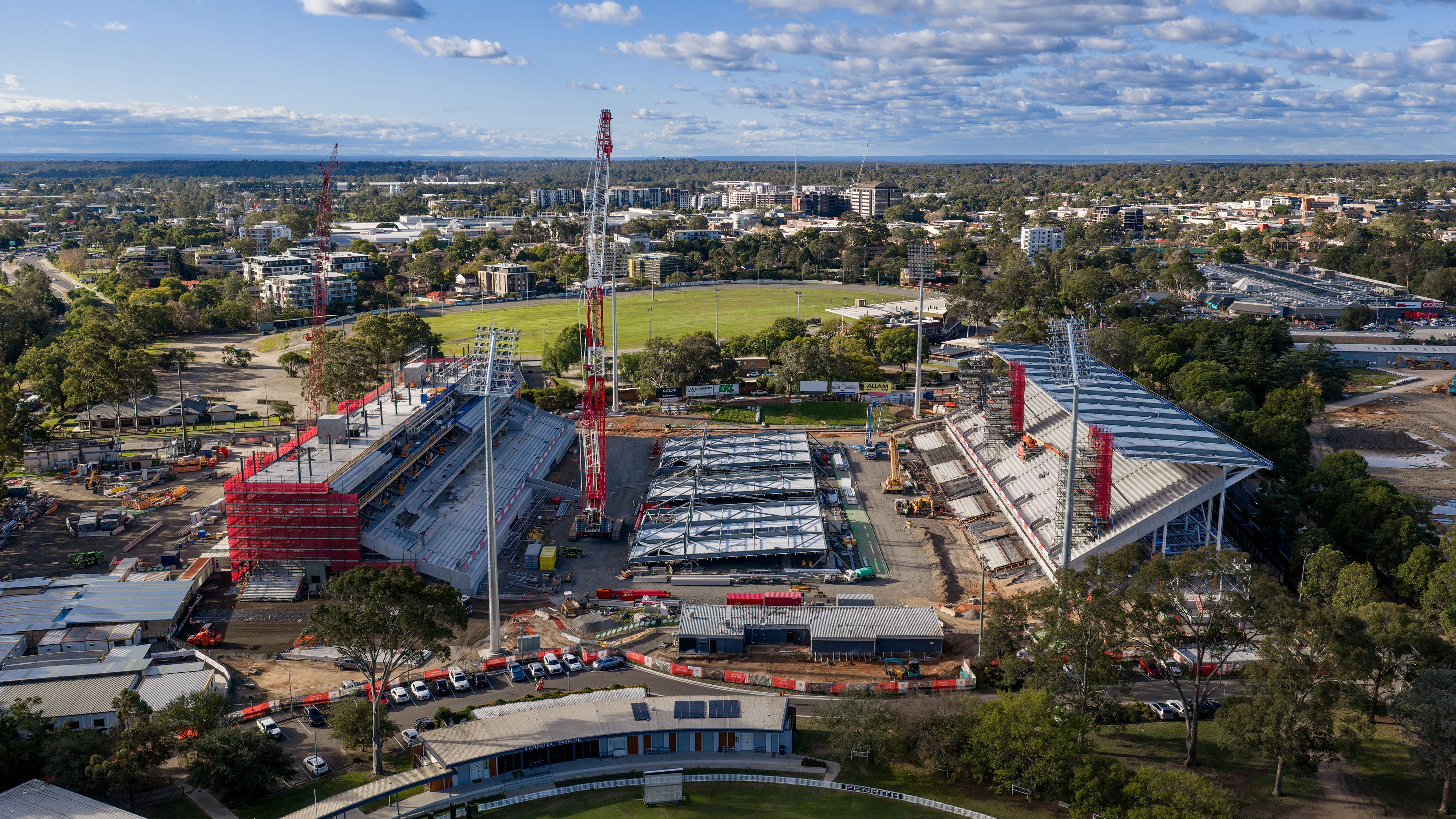
We rely on our people for our ongoing success as well as our strong relationships with suppliers. So I was pleased to join executive colleagues at the Inaugural John Holland Partner Forum in March, where leaders across our business spent time building closer relationships with 130 of our strategic suppliers. The (award-winning) Sydney Football Stadium, which we delivered for Infrastructure NSW in 2022, was the perfect backdrop for robust discussions on cooperation versus competition, which was the theme of the day’s program, and we’ve received very positive feedback from participants for this initiative.
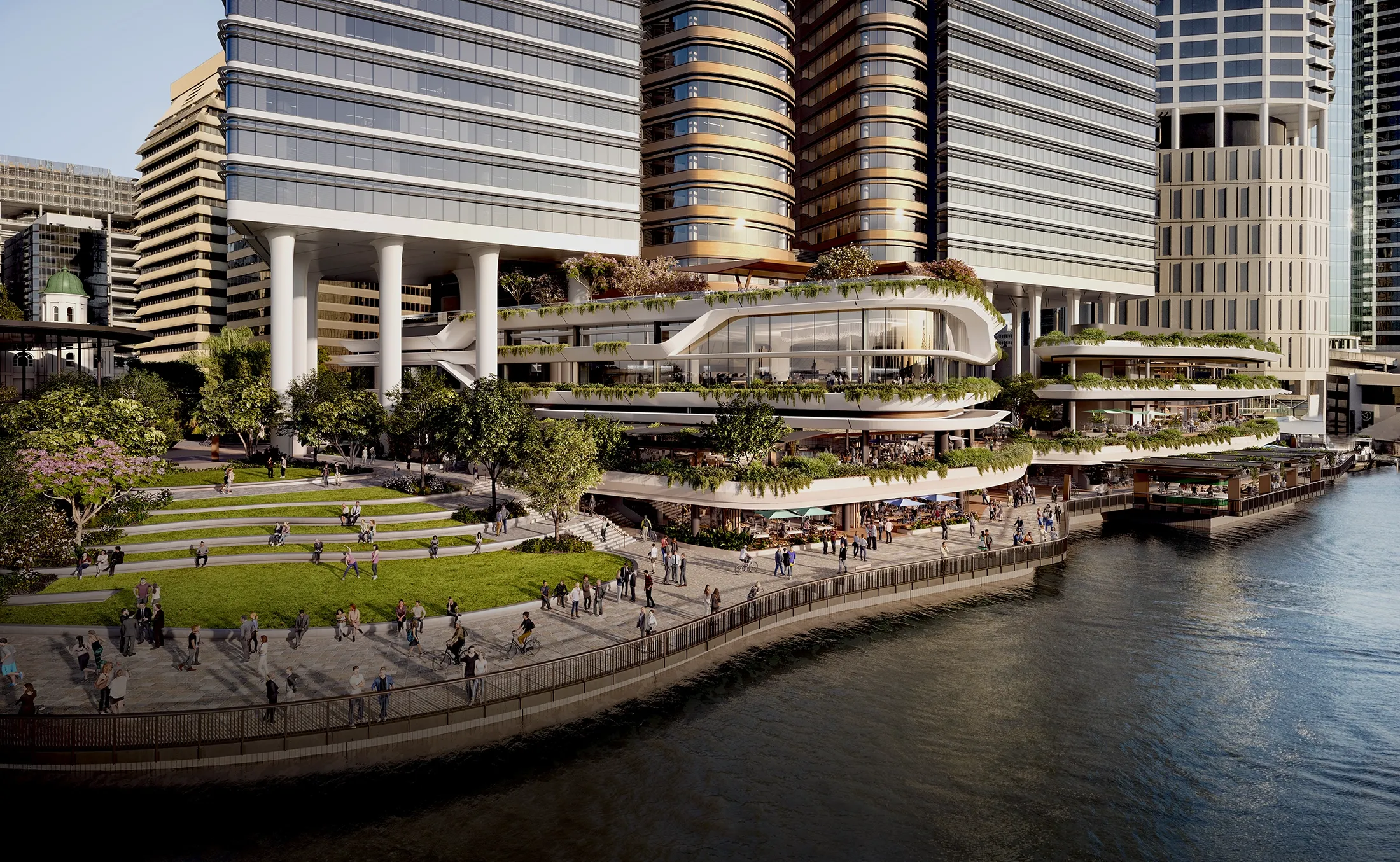
Finally, I’d like to acknowledge David Lehmann who was recently appointed as John Holland’s Chief Operating Officer. David has led our Building business since 2017, overseeing a national pipeline of projects that includes the Sydney Football Stadium, Victorian Heart Hospital, Waterfront Brisbane and much more. Andrew Burr is acting in the role of Executive General Manager, Building while recruitment is underway.
As always, if you would like to further discuss what we’ve shared in this update, please feel free to reach out to me or any of the John Holland team.
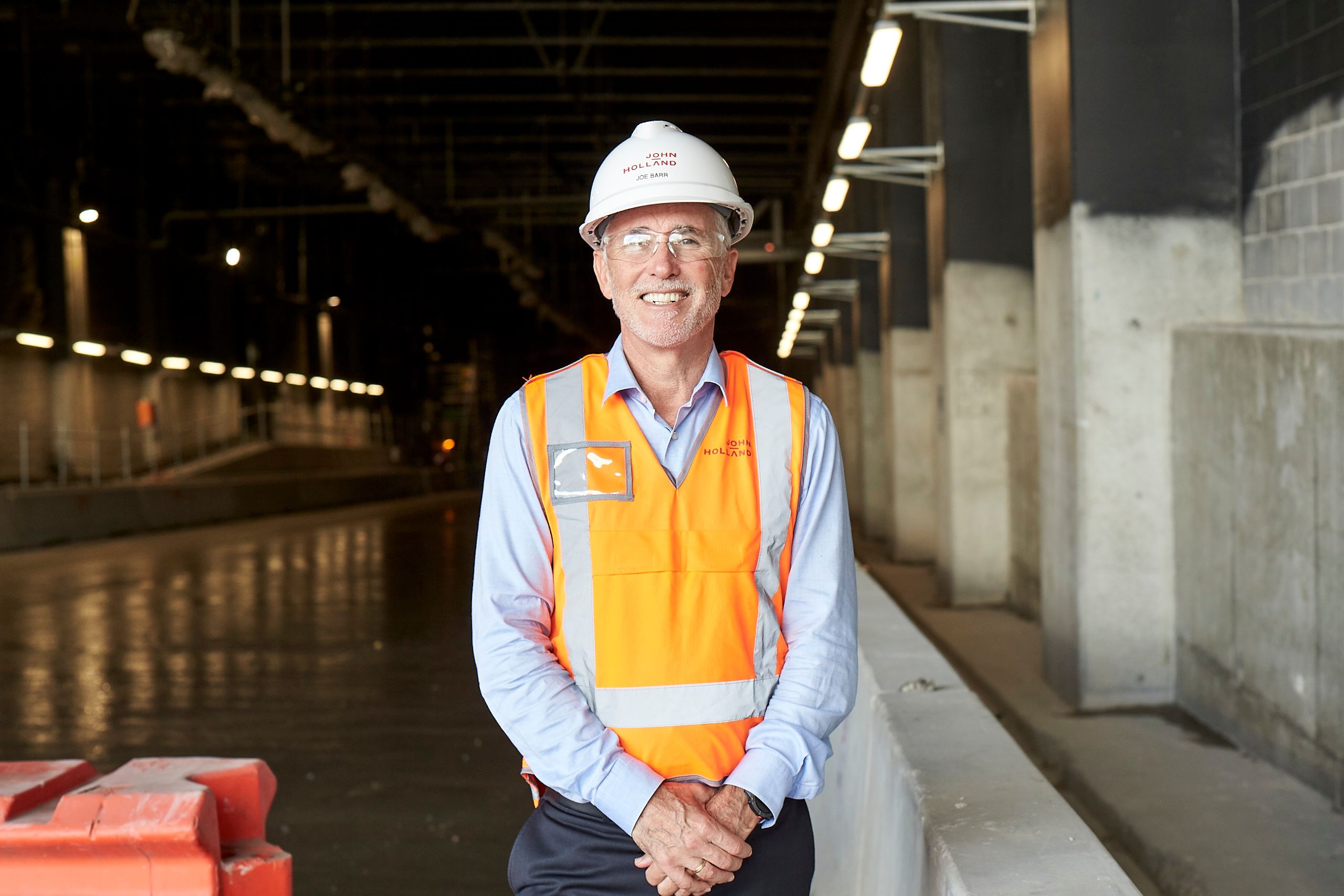
Joe Barr
Putting women in the fast lane to a meaningful career in construction
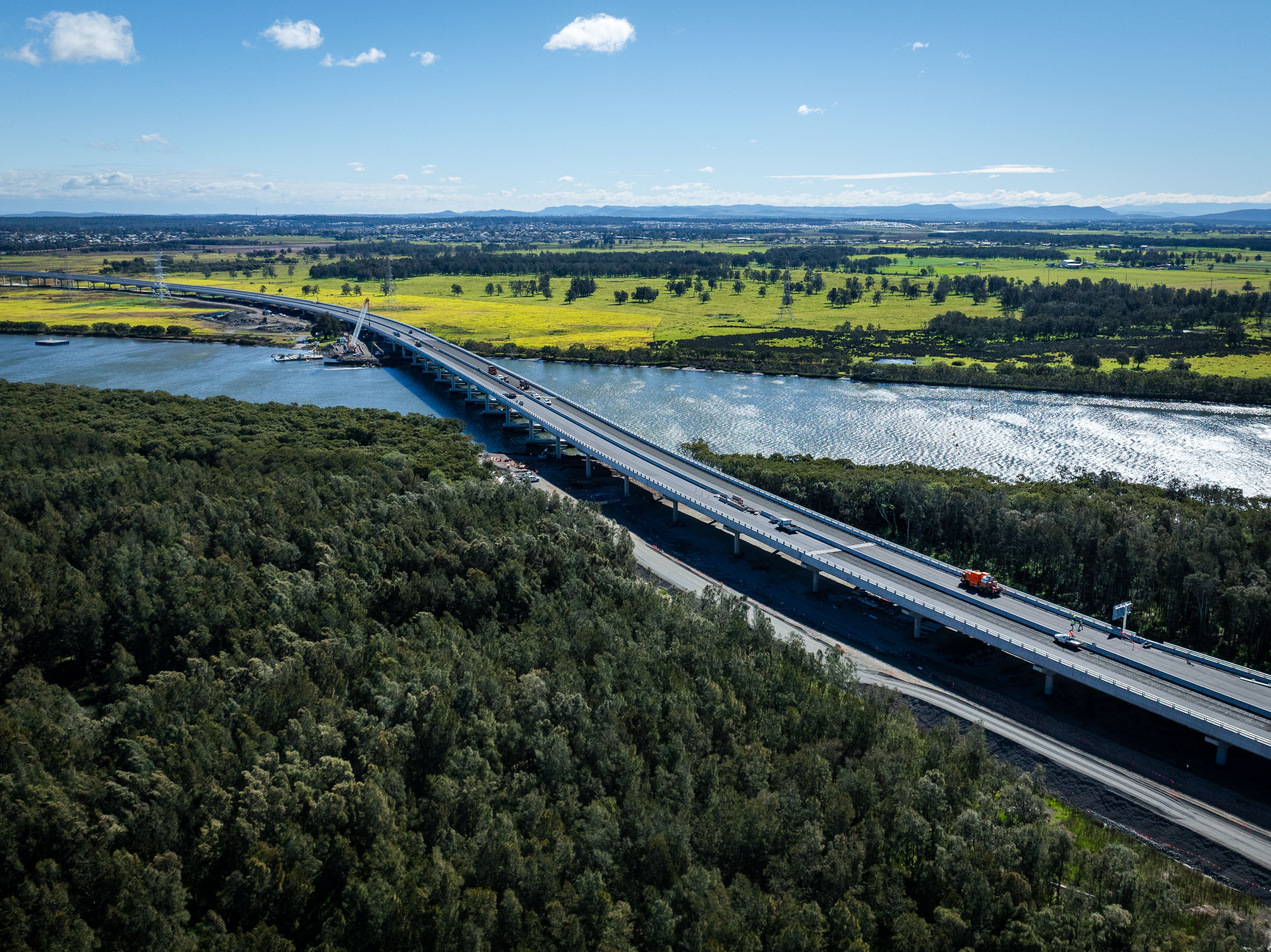
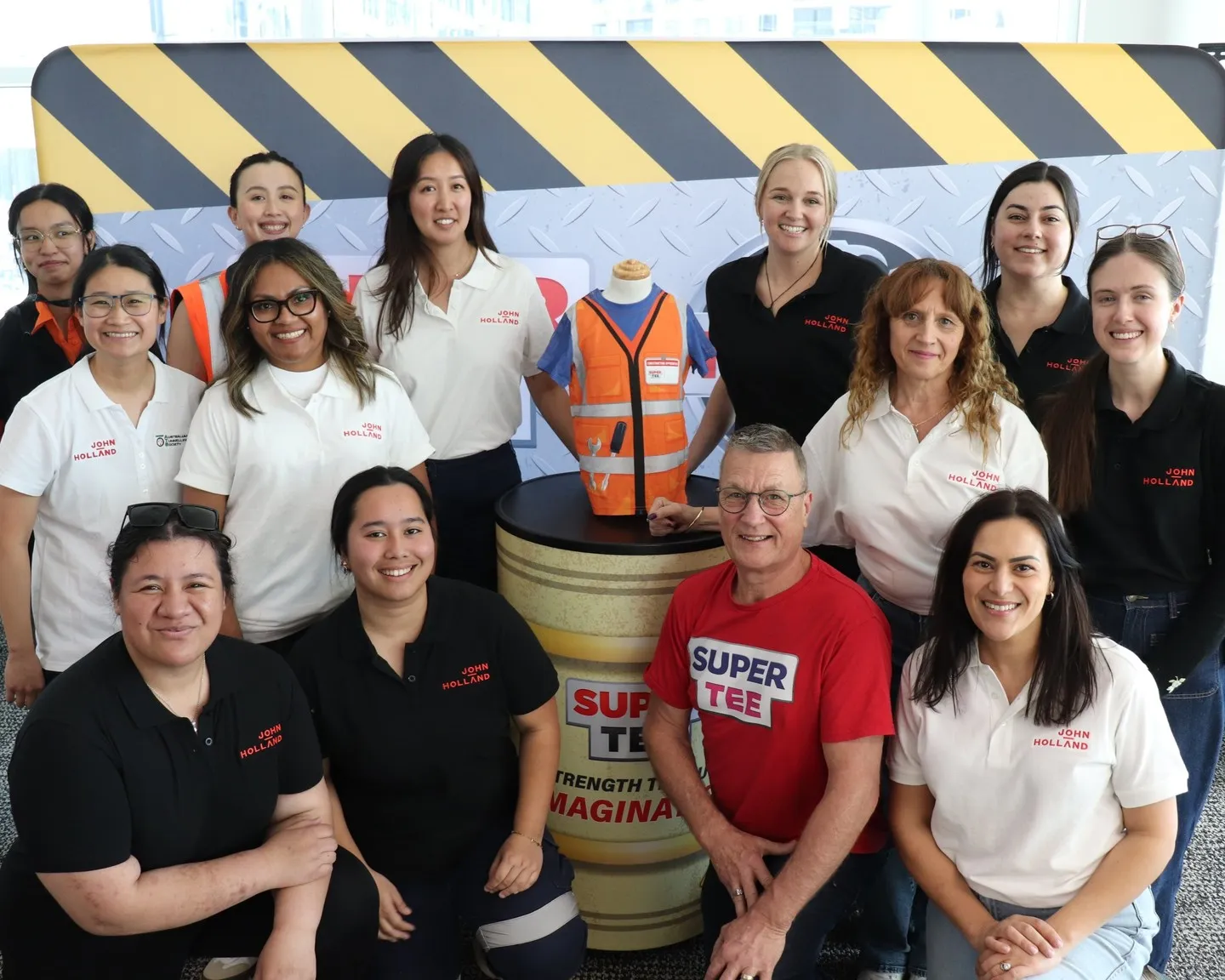
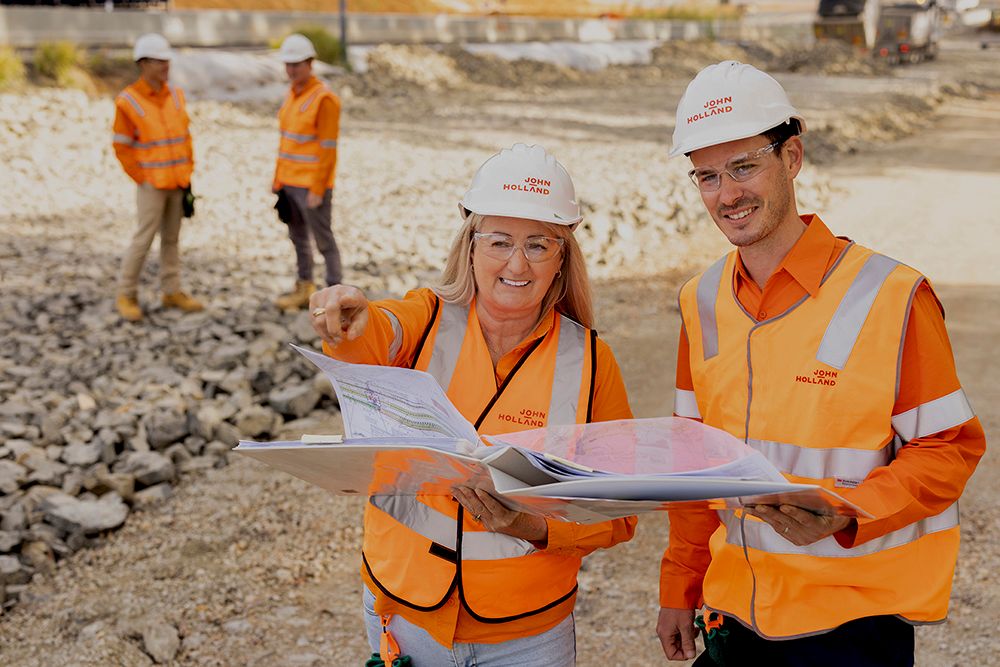
An industry-leading pre-employment program on Sydney’s M7-M12 Integration Project is helping kickstart the careers of women in construction in Western Sydney.
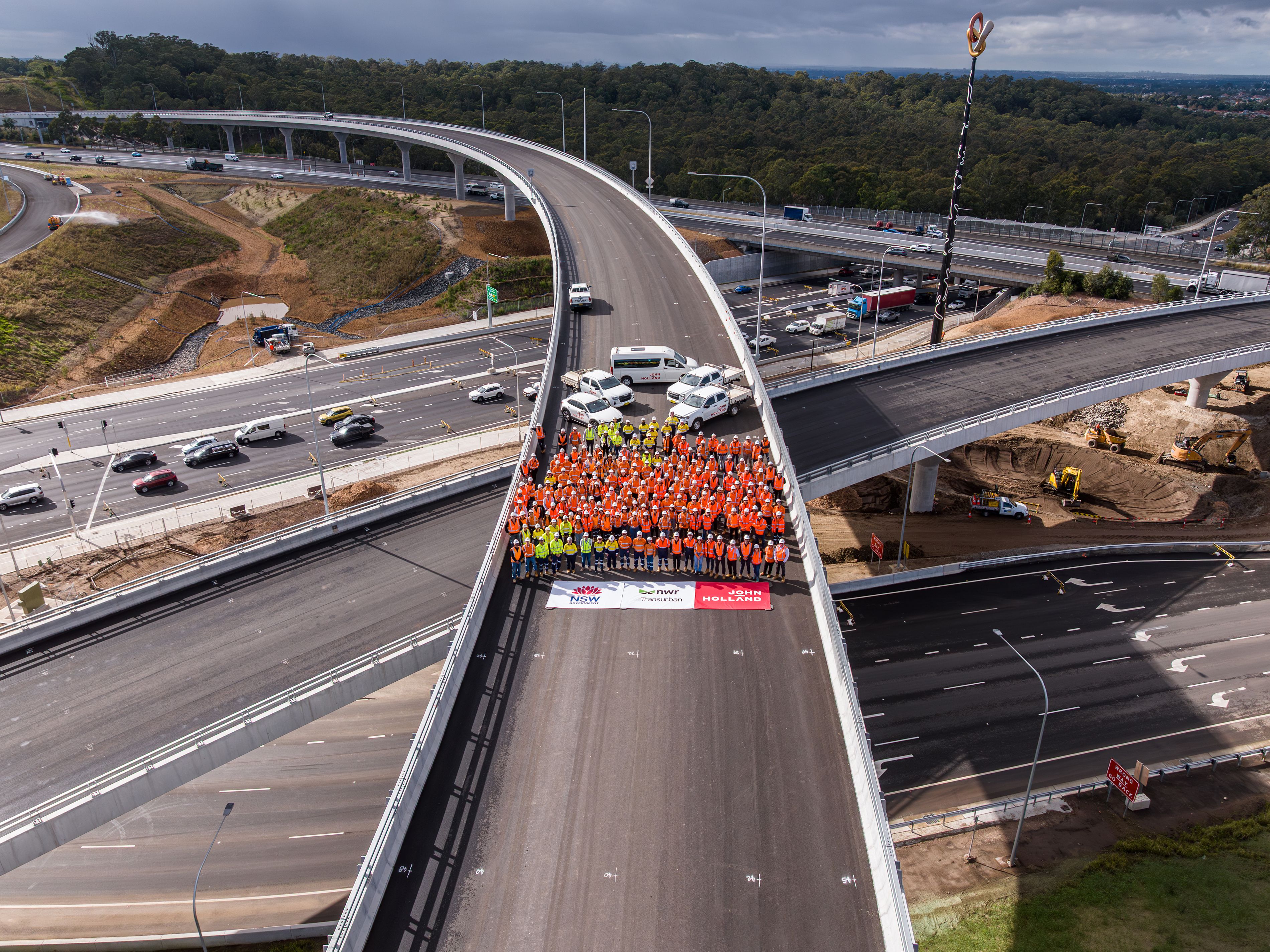
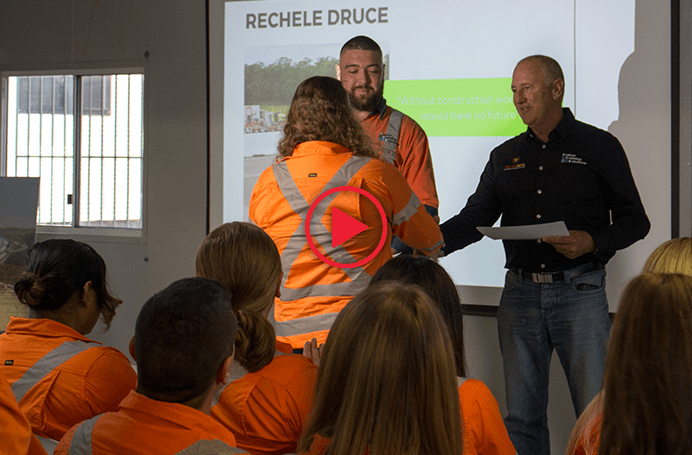
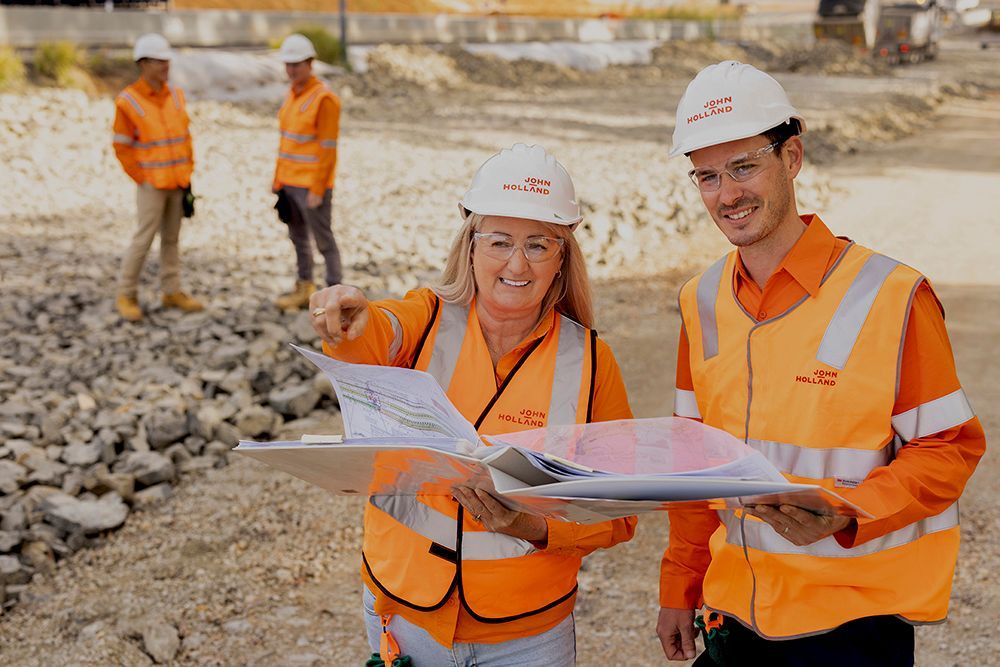
Representatives from Transurban, John Holland and the project gathered to celebrate the graduation of 11 program participants who have secured permanent, ongoing employment with John Holland.
The graduation – held on International Women’s Day – celebrated participants’ completion of a four-week paid training program that prepares them for an apprenticeship in civil construction and ongoing full-time employment.
The women were selected from 400 applicants, all located in Western Sydney.
The first of its kind, the program provides participants with the same benefits that any other direct John Holland employee receives through the Flex from the Start program, supported by the NSW Government’s Women in Construction Industry Innovation Program.
Through this initiative, an additional pre-start time at 8:45am has been introduced to improve work-life balance on the project and make a career in construction attractive to a more diverse range of candidates.
The program directly supports the NSW Government’s goal to increase the number of women in trade and non-traditional construction roles by 2030. The M7-M12 Integration Project has already exceeded these targets with 27 per cent representation of women in blue collar positions.
The M7-M12 pre-employment program is funded by the NSW Department of Education.
During the life of construction, the M7-M12 Integration Project will provide more than 7000 employment opportunities.
John Holland was appointed to design and construct the M7-M12 Integration Project on behalf of WSO Co – a joint venture comprising Transurban Group, Canada Pension Plan Investment Board and QIC Private Capital on behalf of its managed funds and clients.
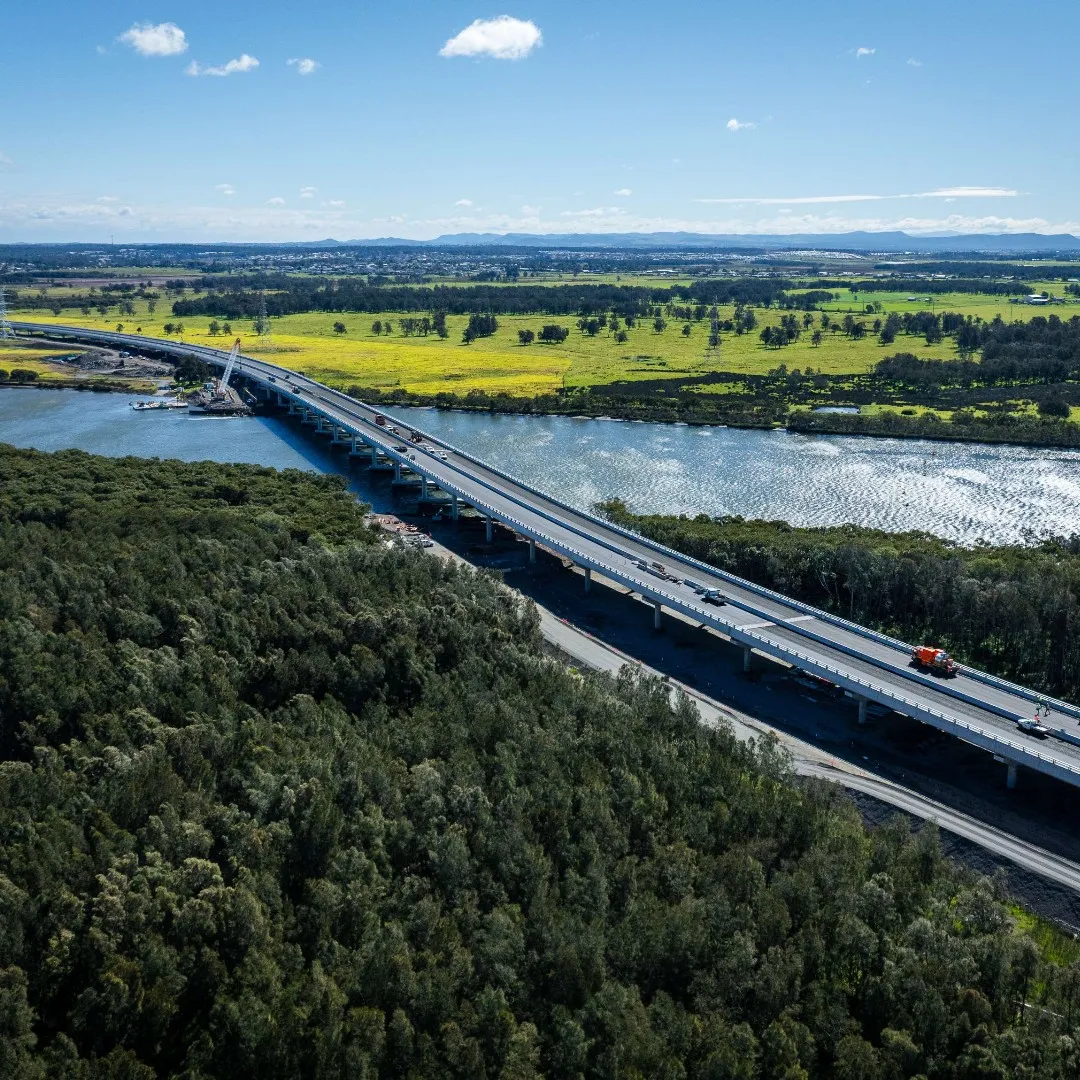
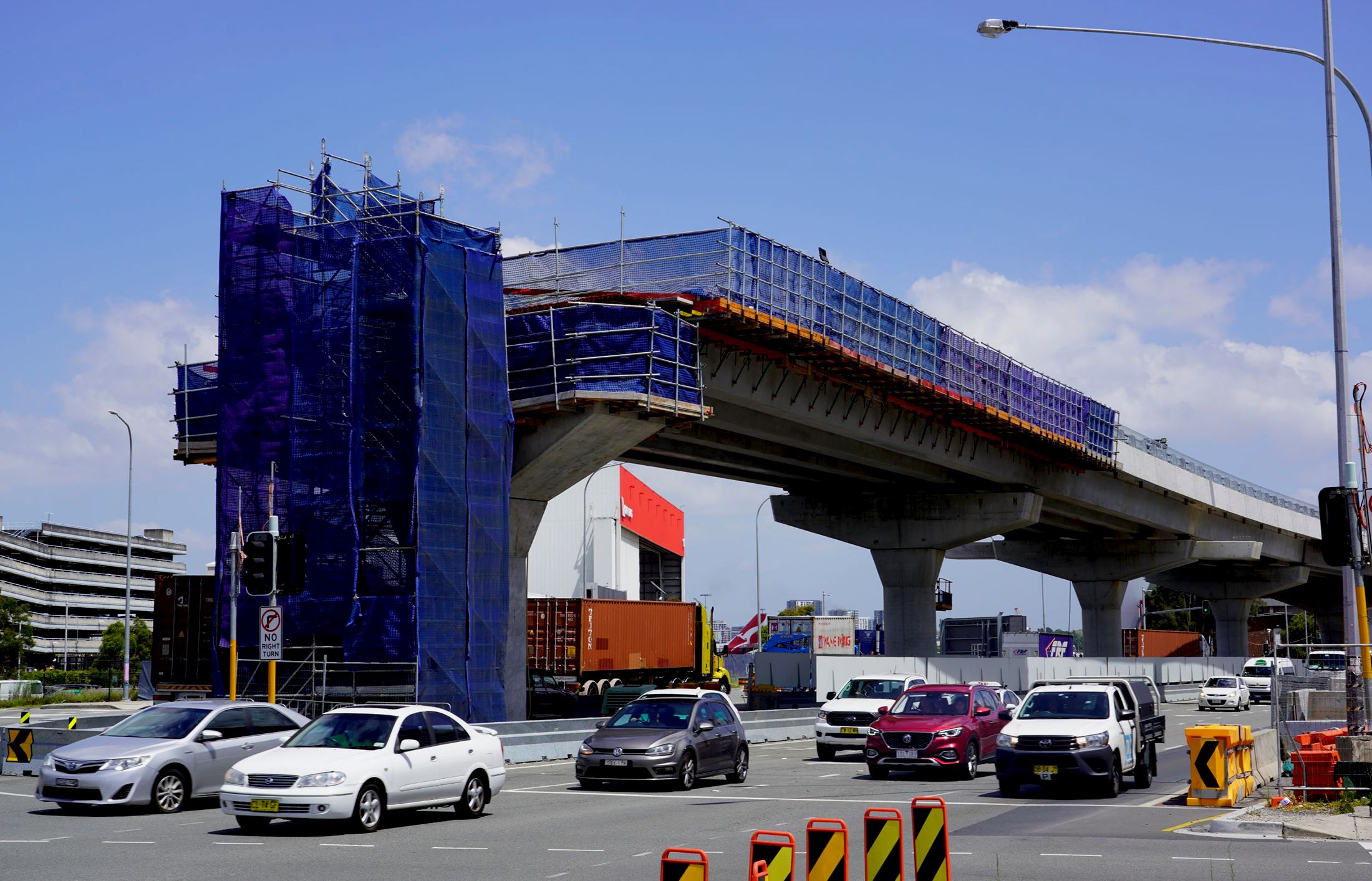
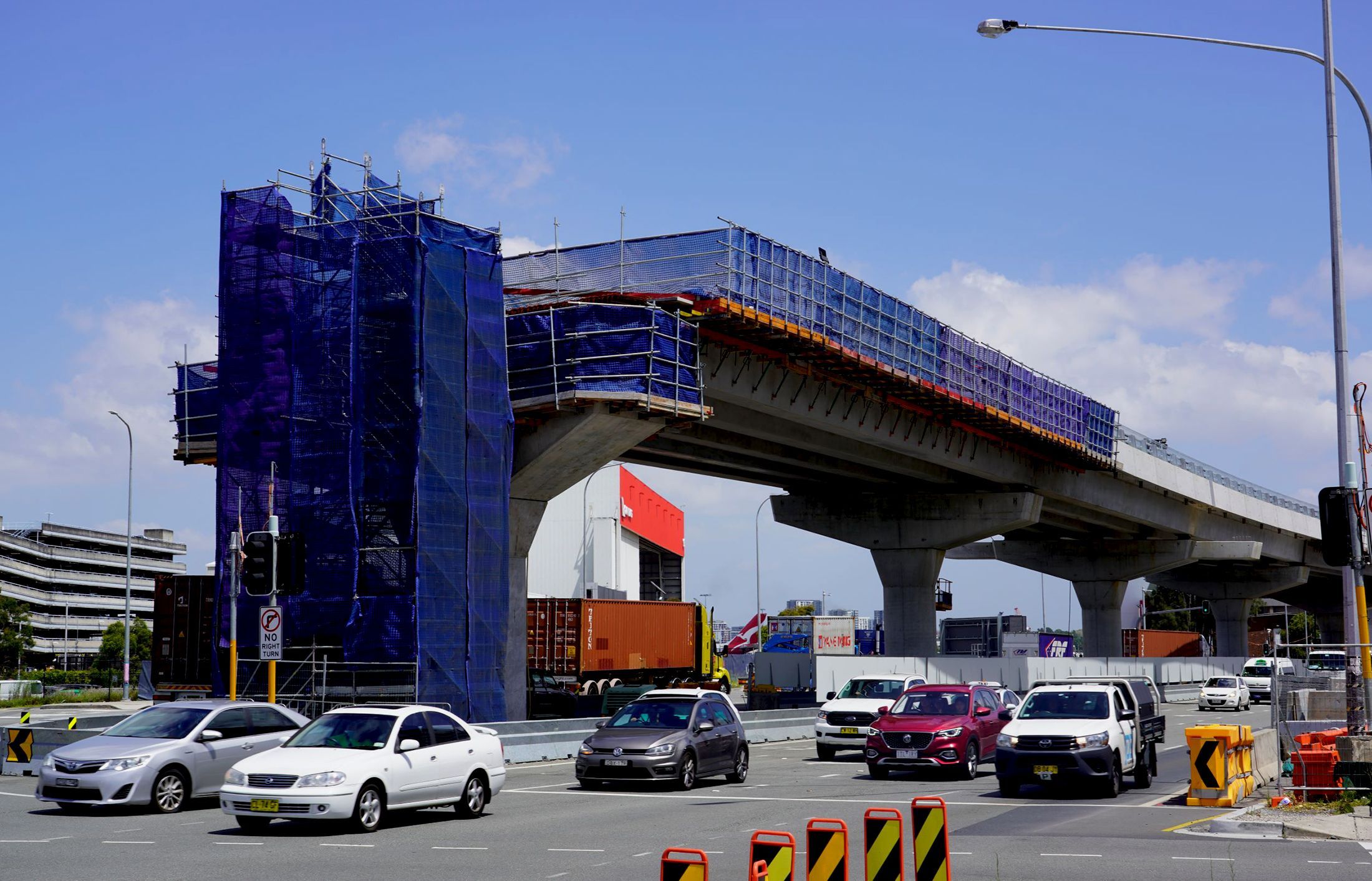
Due to open in 2026, the M7-M12 Integration Project will increase road capacity, reducing congestion and improving travel times for motorists and freight around Western Sydney, and reduce traffic in the local road network, transforming local communities. Once complete, the project will provide direct access to commercial and residential hubs, and the new Western Sydney International Airport.
There’s something in the water
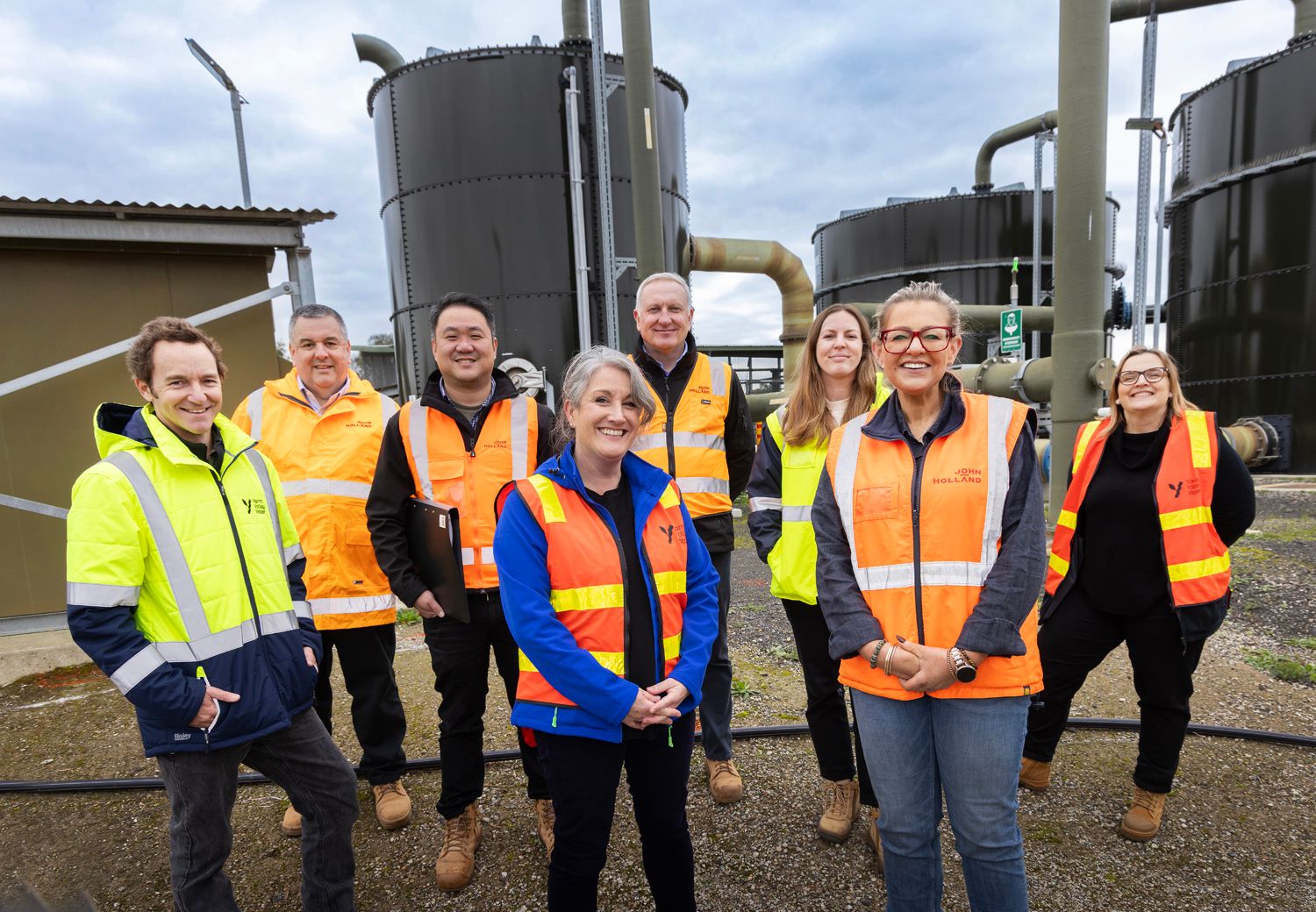
Here at John Holland, we take water - and wastewater - very seriously. And we’ve got the team and the track record to deliver the infrastructure that keeps it flowing.
For us it’s all about creating long term partnerships with our customers, our relationship with Melbourne Water is coming up to 24 years ; our framework agreement with SA Water has just been extended by four years; our two long-term partnerships with Sydney Water stretch back more than 10 years in total, and we’re coming up to five years with Queensland Urban Utilities.
Our success in maintaining and upgrading water and wastewater assets for these customers has seen John Holland awarded a range of contracts over the past 18 months, including the:
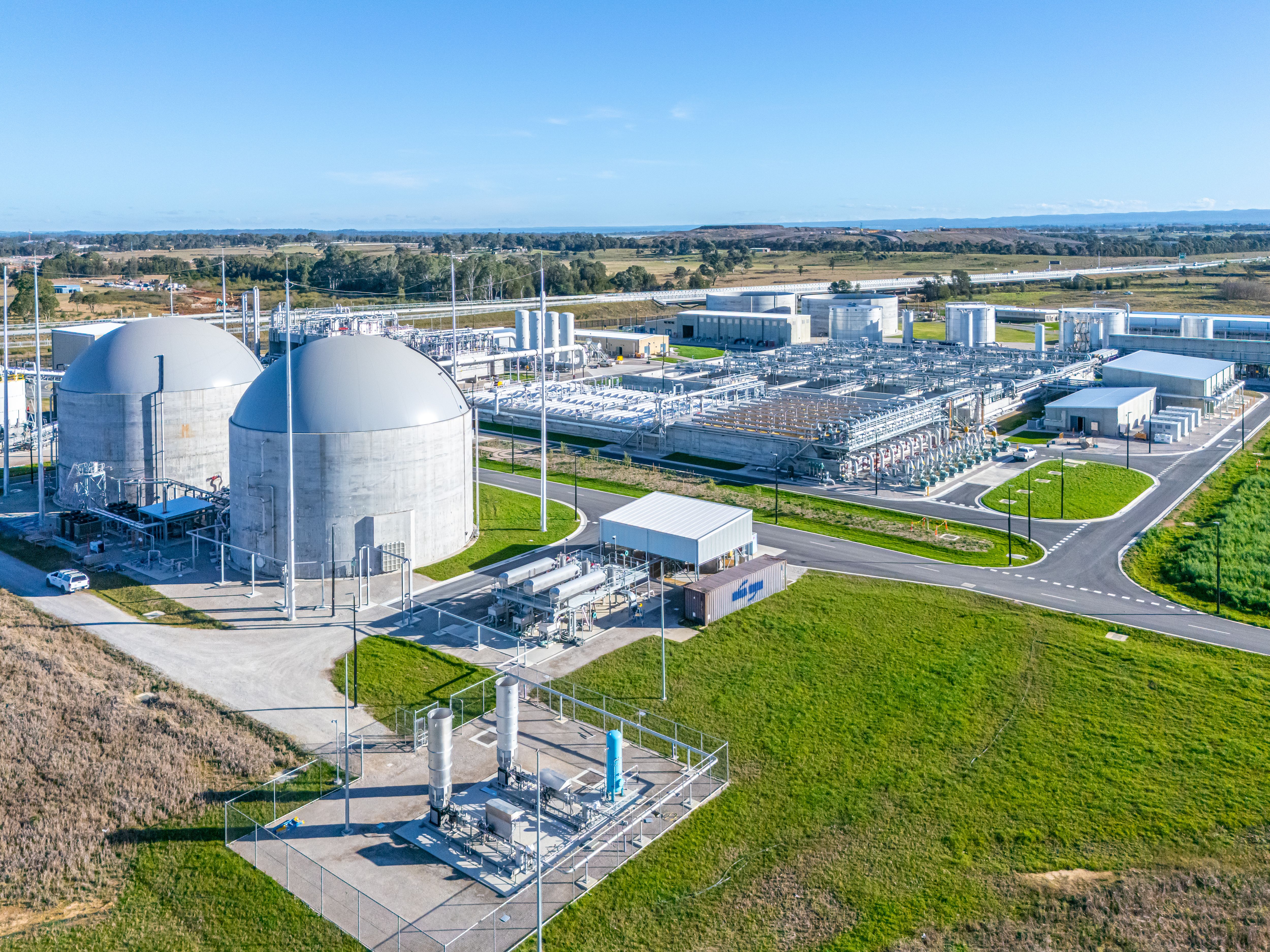
- $530m Advanced Water Recycling Centre project from Sydney Water (plus the $200m pipeline contract that goes hand-in-hand with it)
- $450m Western Treatment Plant bundle with Melbourne Water
- $500m+ North West Treatment Hub package for Sydney Water
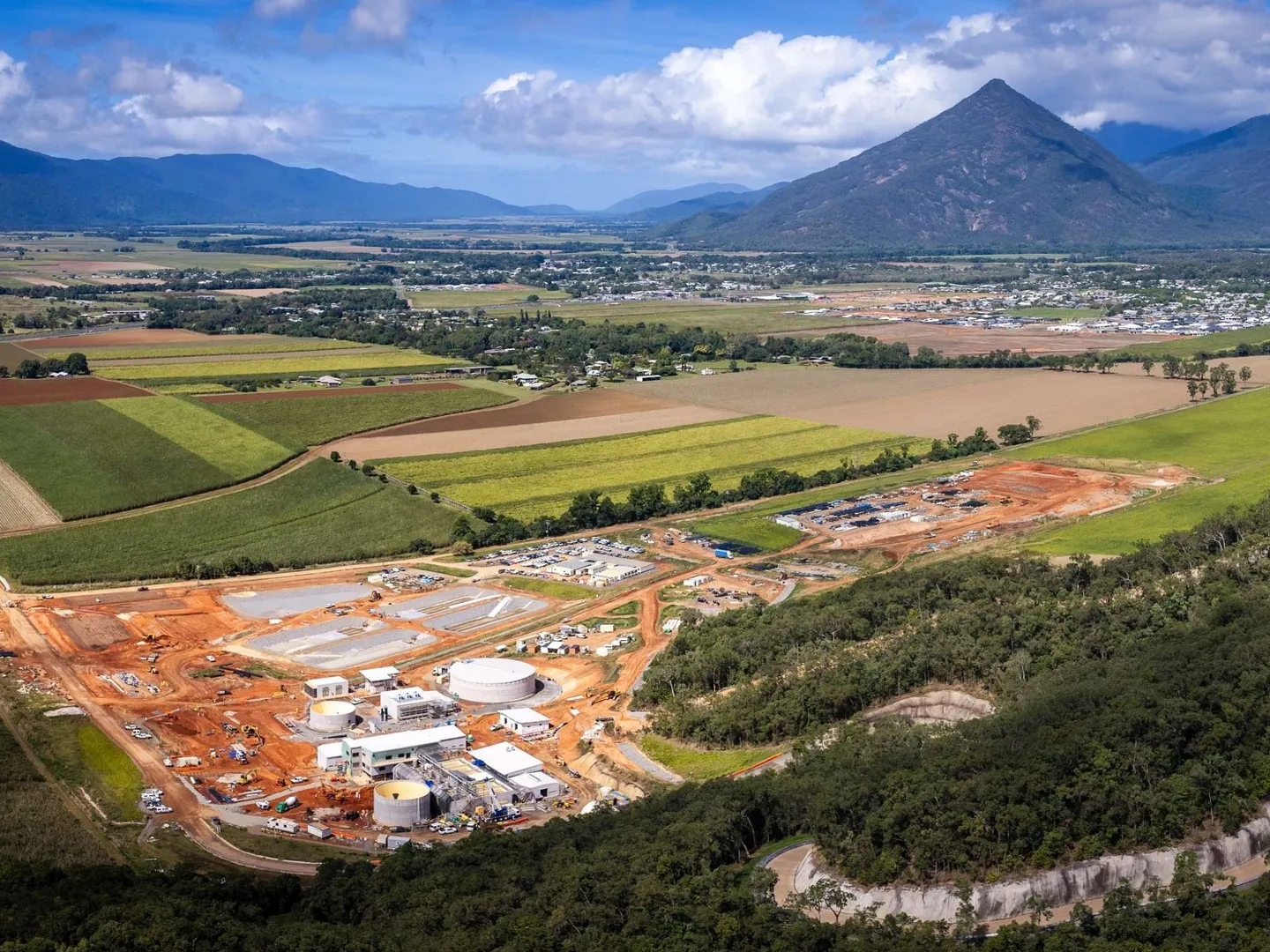
- $325m Cairns Water Security Stage 1 package for Cairns Regional Council
- $300m Lake Macdonald Dam upgrade for Seqwater.
We’ve also been contracted to deliver early works for the Belmont Desalination Plant in the NSW Hunter region, and we’re preferred for the main contract later in the year.
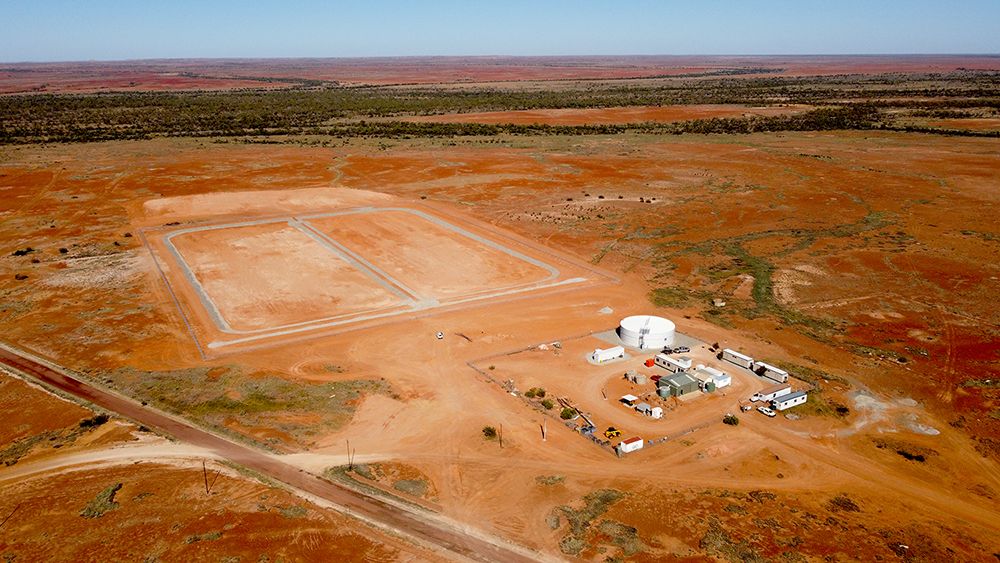
Plus, we’re currently delivering the Hobsons Bay main sewer upgrade underneath the Yarra River in Melbourne, and remote desalination plants in the South Australian outback as part of our SA Water framework agreement.
What is it that makes John Holland such a trusted partner in the water market?
According to our National Water Manager, Shaun Kempton, it comes down to the breadth of skills and experience of our people .
“Success in this market isn’t just about price, it’s about adding value. And it’s the latter that builds long-term relationships with clients,” he says.
“We aim to be a trusted adviser. We want our clients to talk to us about the challenges, complexities and risks in a project, and to be able to have honest and robust conversations to work through the solutions.”
On track in the nation’s capital
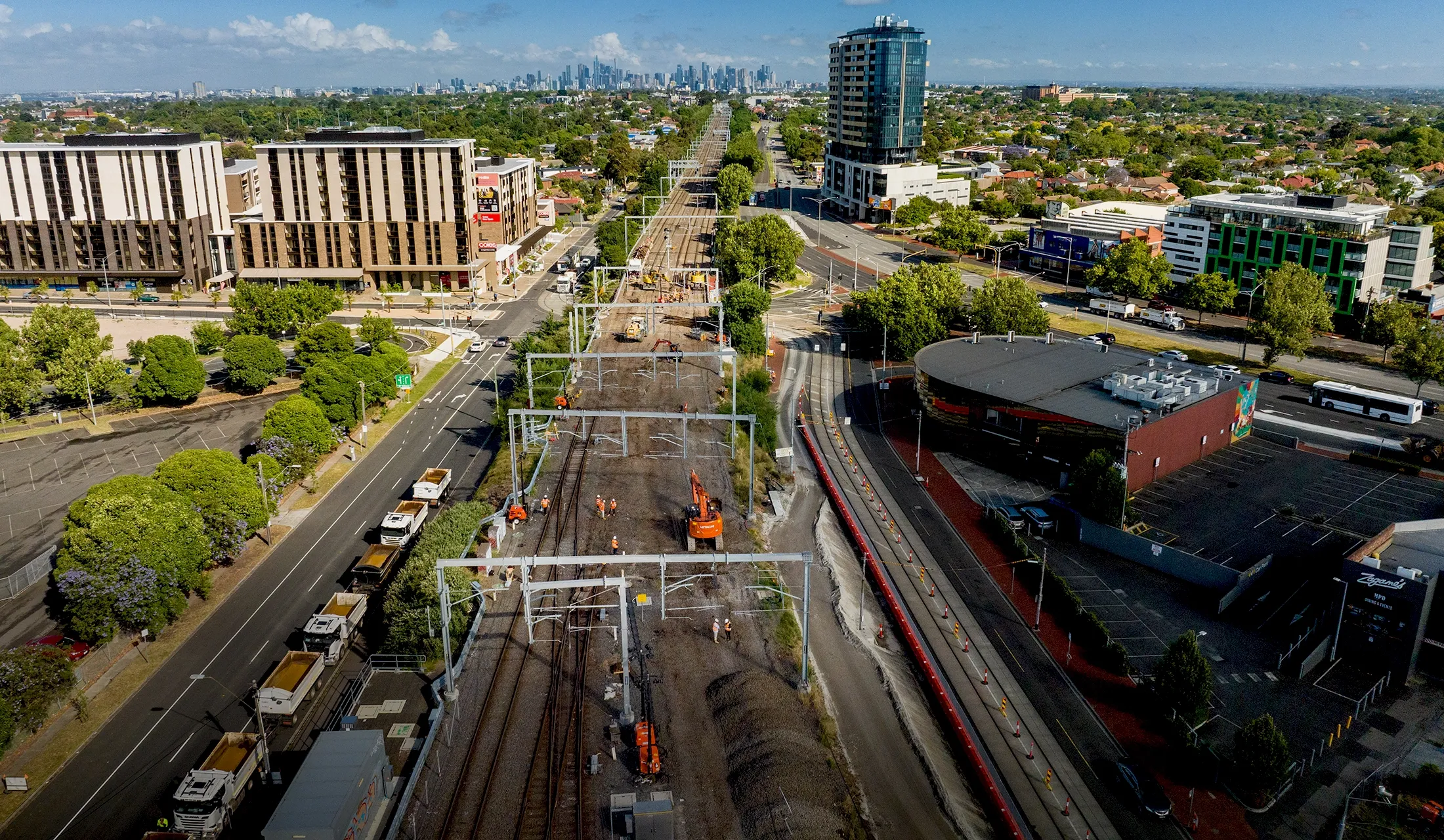
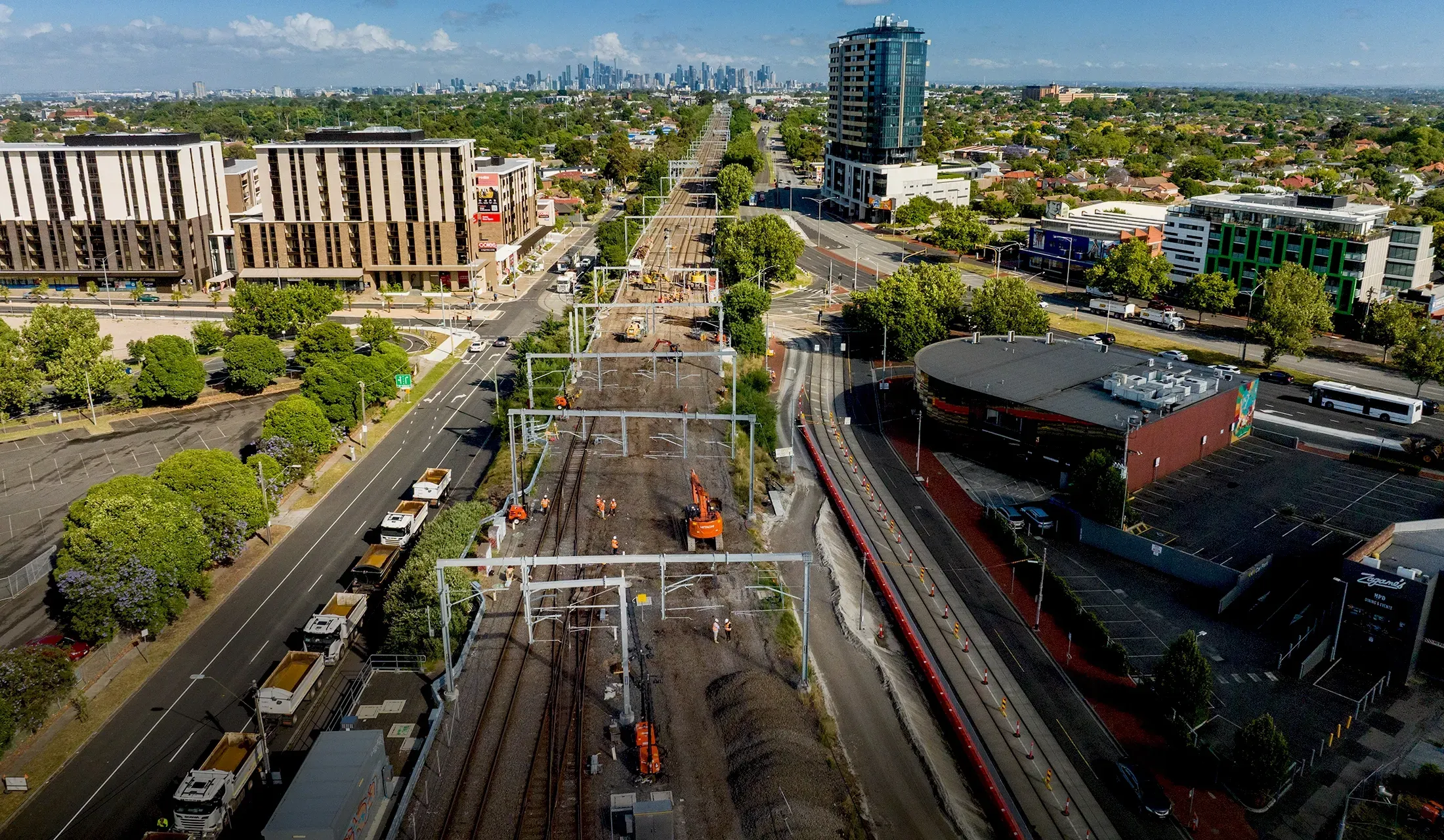
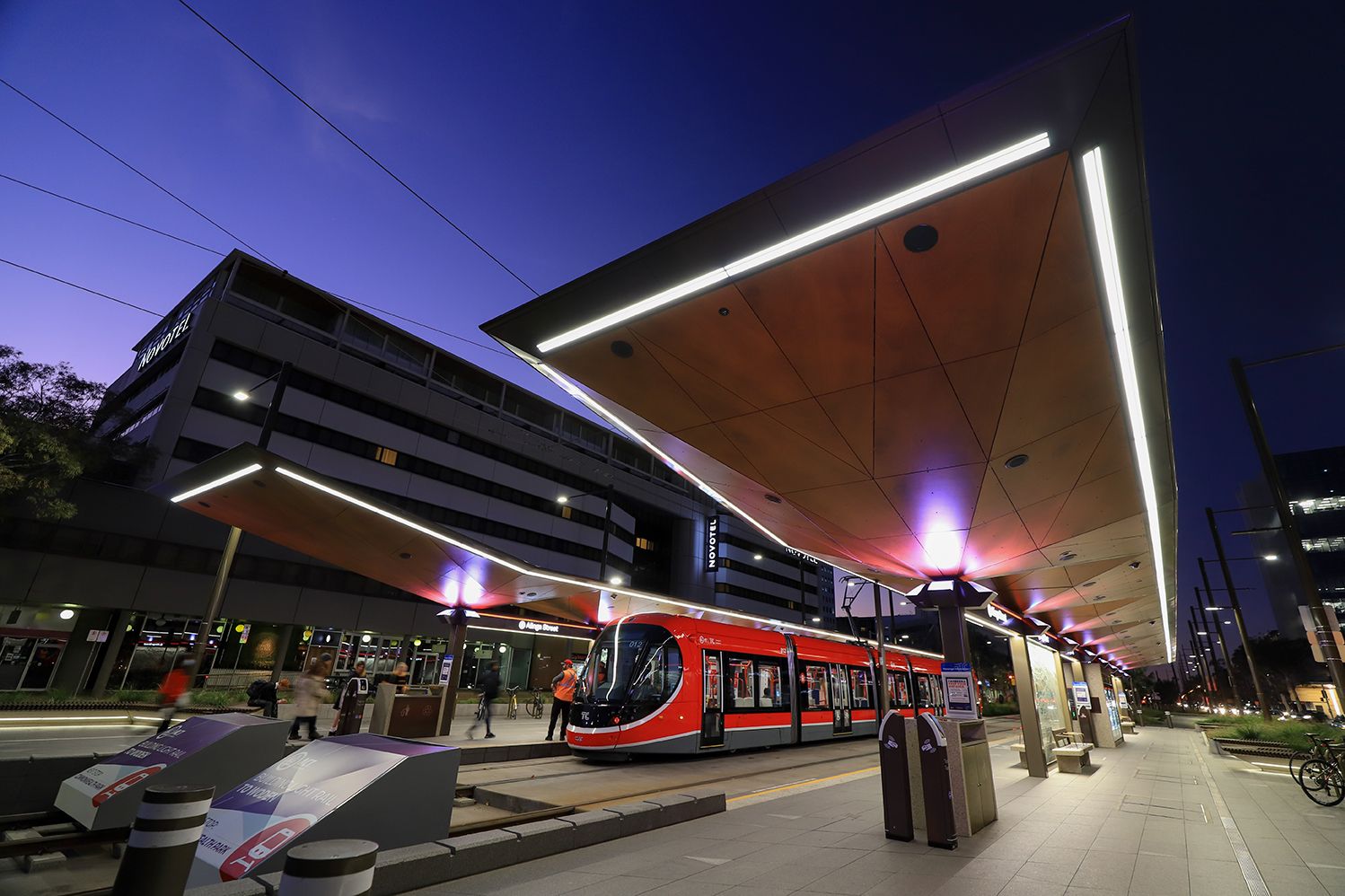
There is a lot to celebrate about Canberra Metro. Our five-year anniversary celebrates us successfully operating CMET as a JV partner since passenger services began in April 2019. The light rail network includes 14 stops from Gungahlin to Alinga Street in the City.
But it doesn’t stop there.
We are now all aboard to deliver the design and construction and operations and maintenance (O&M) contracts for Canberra Light Rail Stage 2A – City to Commonwealth Park extension.
The extension will see three new stops built at Edinburgh Avenue, City South, and Commonwealth Avenue, extending the network by 1.7 kilometres to provide a greater connection between the city and the lake.
Continuing our strong relationship with the ACT Government, once Stage 2A is completed, CMET will take over the operations and maintenance of the extended light rail network growing our business.
“This extension will deliver improved public transport for decades in Canberra and help shape the development of Canberra’s city centre. We are looking forward to providing exceptional tram services to more of the Canberra community once the extension is complete – this really will help transform lives for the people of Canberra,” Bruno Lancelott, General Manager Canberra Metro Operations (CMET).
Construction on Stage 2A, which will start later this year, will support thousands of local jobs during the four-year project.
“It is a true showcase of our end-to-end capabilities, to deliver all parts of rail, from design and construction, to putting people on trams. I cannot wait to see more people boarding our trams when services start from January 2028.
Stage 2A will travel along London Circuit to transform the southern part of the CBD, providing public transport to major employment and future housing precincts in City West, the Australian National University, City South, Acton Waterfront and Commonwealth Park.
This is not traditional light rail though, the extension from Alinga Street to Commonwealth Park will be delivered wire-free to support National Capital Authority requirements for a future connection through the Parliamentary Triangle.
This means the existing fleet will be retrofitted with batteries to power the light rail fleet, with five new light rail vehicles, currently being built, that are pre-fitted with battery technology. This will increase the fleet size from 14 to 19.
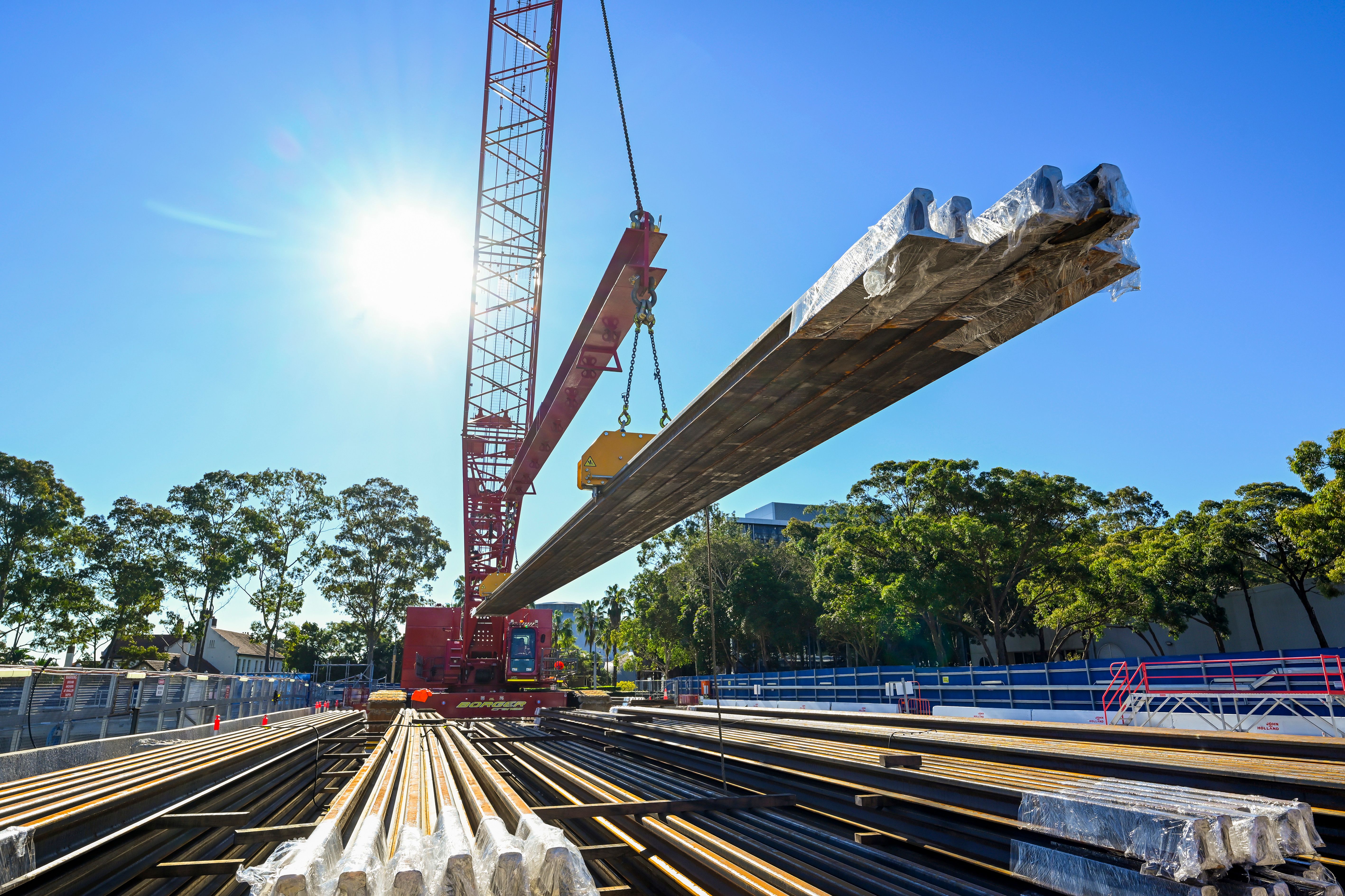
In a Canberra first, the light rail corridor to Commonwealth Park will include sections of green track where the light rail line sits within a bed of specially selected grass or plants instead of concrete. This helps reduce glare, noise, and dust, and will complement the local landscape.
Design work is underway for the green track and protypes of grass are being evaluated to meet customer requirements and maintainability.
Enabling works will begin shortly, with the full project team mobilised in Canberra at the end of this year.
Canberra Metro in numbers
- More than 15m passengers since the network opened
- 99.98 per cent punctuality
World Class customer satisfaction with 95 per cent of customers likely to recommend the service.
Transforming lives through Indigenous employment in Queensland
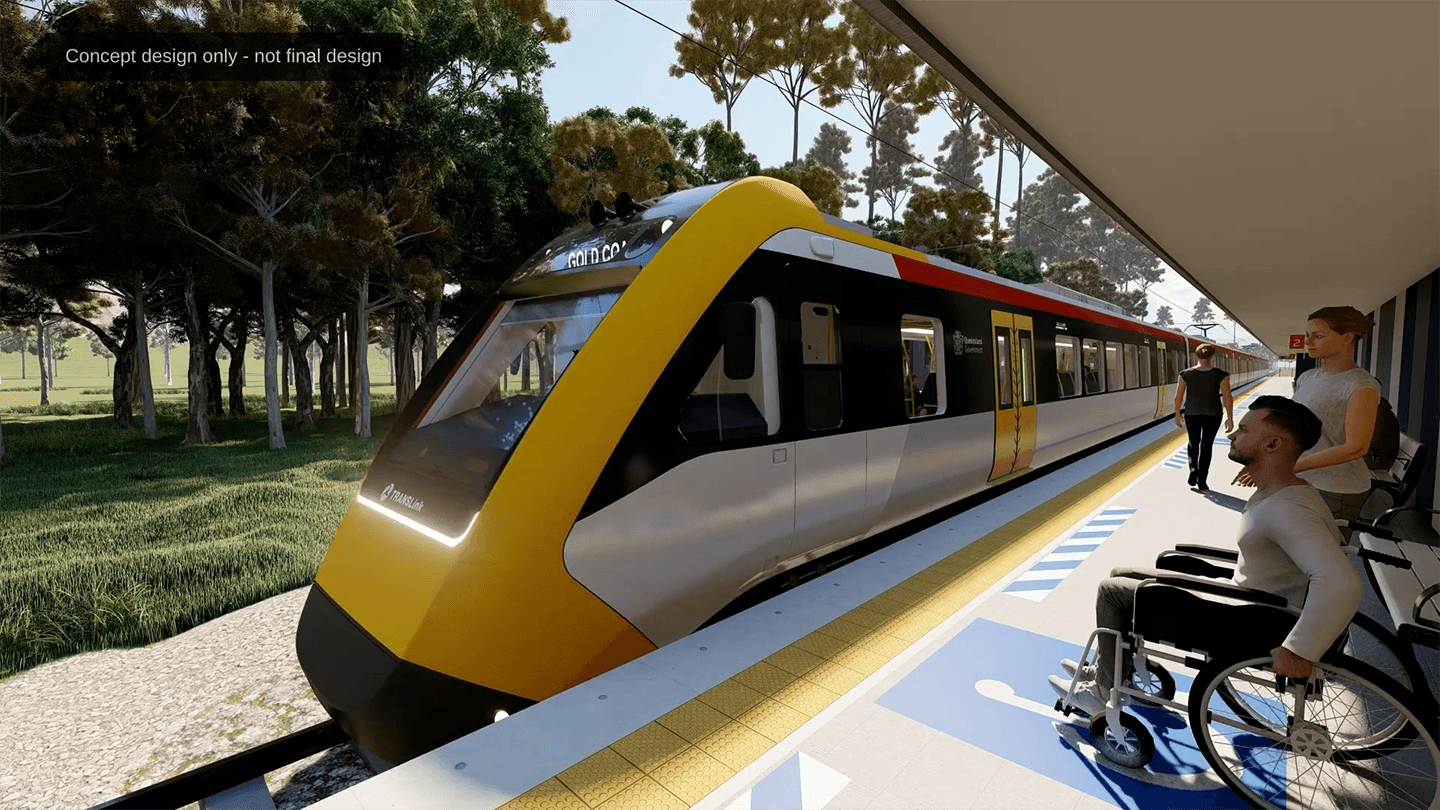
John Holland is working with local businesses to deliver a new facility in the Maryborough region, to manufacture the Queensland Train Manufacturing Program (QTMP) fleet.
Construction of the purpose-built manufacturing facility at Torbanlea has been subcontracted to John Holland.
The new fleet will support Queensland’s population growth and upcoming 2032 Olympic and Paralympic Games.
Earlier this year, Beenleigh Steel Fabrications secured a $40 million contract to supply 2,400 tonnes of structural steel for Maryborough's facility in Torbanlea.
Colin Matthews, John Holland’s General Manager for Building in Queensland, highlighted the project's commitment to promoting local and Indigenous employment, aligning with broader initiatives across South East Queensland.
"At John Holland, we're always looking for opportunities to improve benefits to the community and leave a positive legacy," he said.
"This is another great example of building Queensland local jobs, capability and Indigenous employment – while delivering great project outcomes."
John Holland has a proud commitment to Indigenous employment, evident through our $440 million investment with Indigenous businesses nationwide since 2020, and our record of surpassing the Aboriginal Participation in Construction (APIC) target by 310 per cent on projects including the Rozelle Interchange in New South Wales.
John Holland by the numbers